
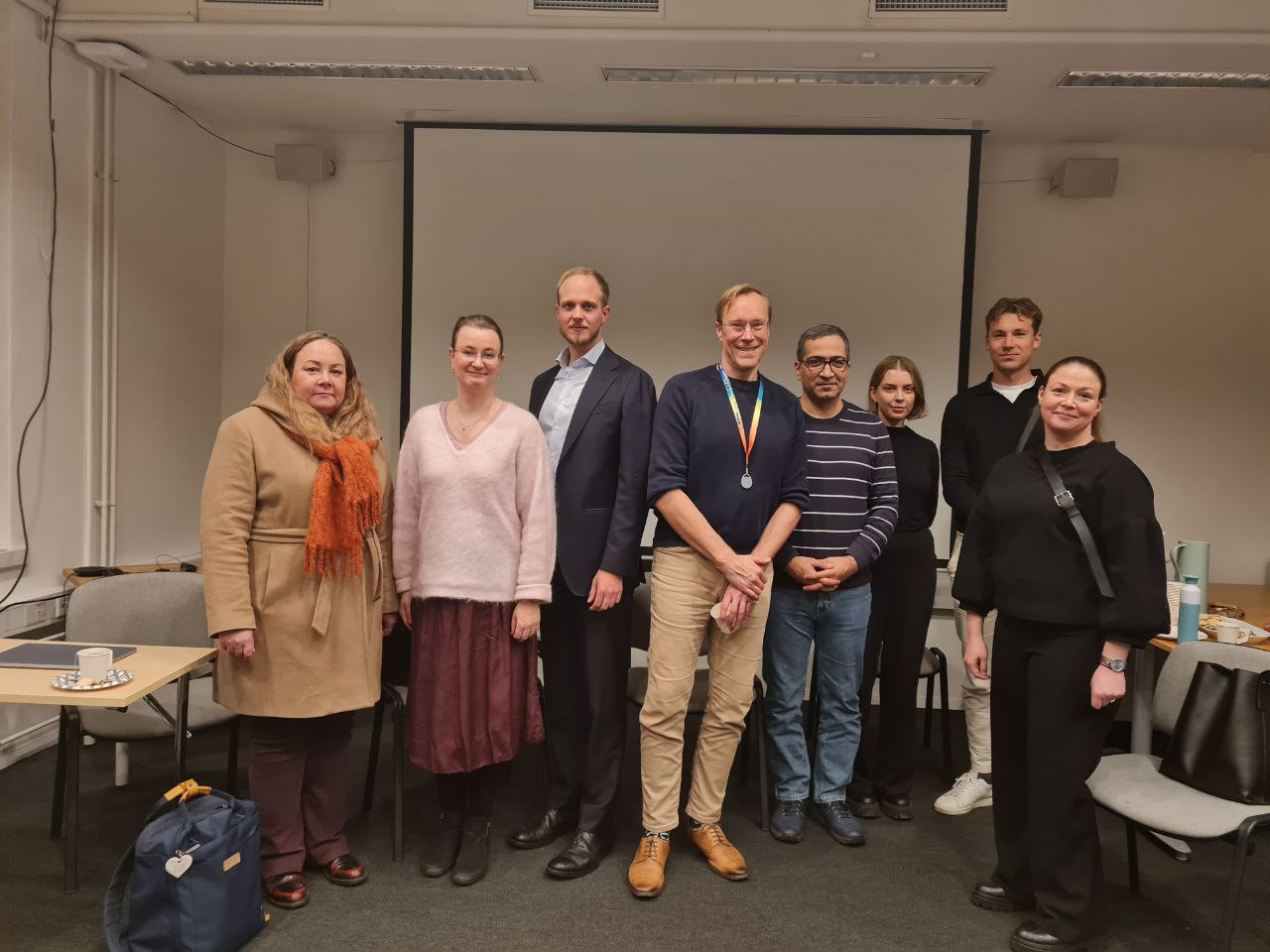
Yesterday 17th of December 2025, we hosted a roundtable meeting at Maria 01 regarding the future of sustainability reporting in EU. we didn’t just talk about compliance. We placed our bets on the future.
In a room filled with Finland’s top ESG leads, strategists, and researchers, we hosted an exclusive roundtable to debate a critical question: In 2030, what will sustainability reporting in the EU actually look like?
While most of the market is panicking about the 2025 CSRD deadlines, we took a step back to look at the tsunami forming on the horizon. The consensus? The rules are not finished—they are just getting started.
Here is what we learned from the debate.
The Pulse of the Room: A Fragmented Future of sustainability reporting
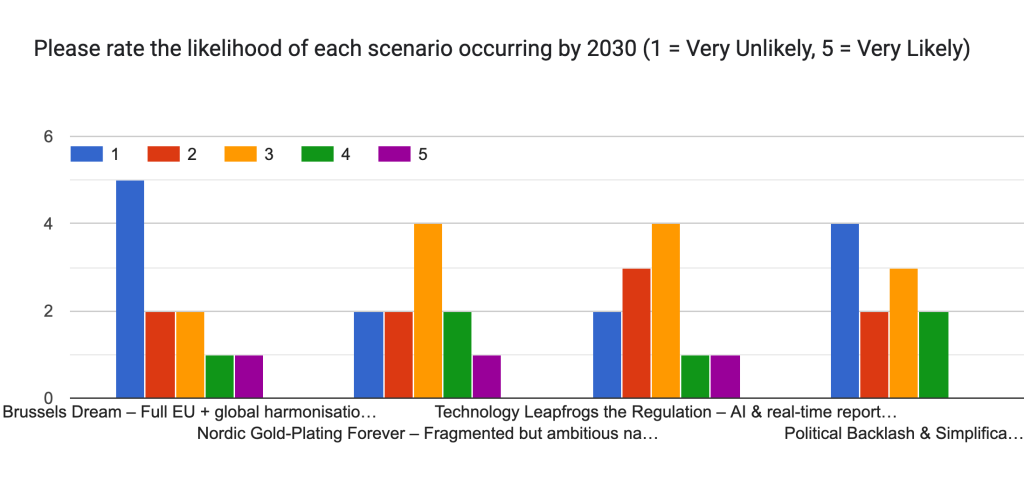
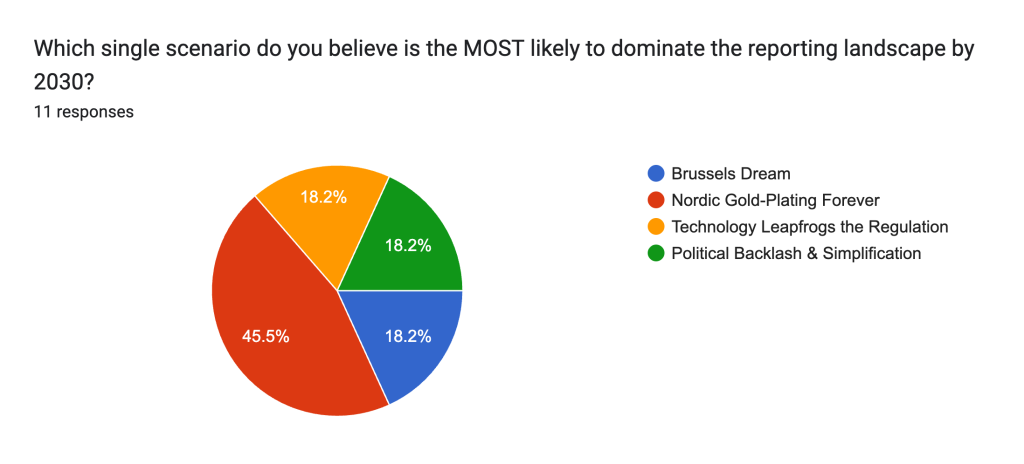
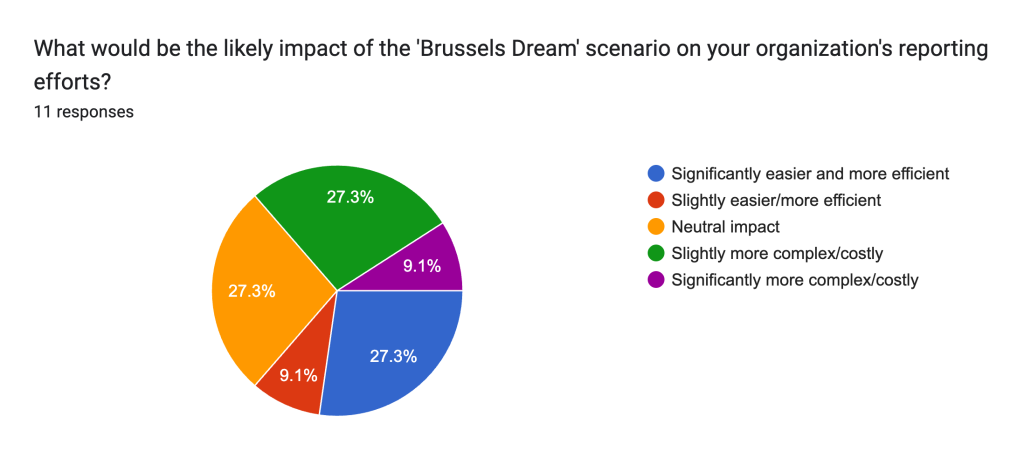
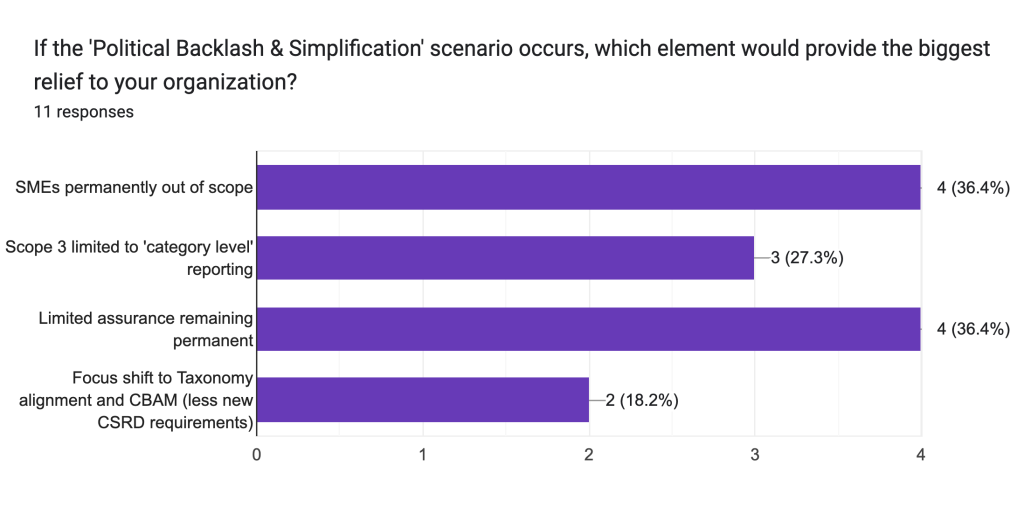
We kicked off the session with a live survey, and the results were telling: opinions were completely fragmented. There was no single dominant view on where we are heading. This uncertainty set the stage for a fierce debate on four potential scenarios: The Brussels Dream (Harmonization), Nordic Gold-Plating, Tech Leapfrogging, and The Great Rollback.
Check the Survey results:
The Debate: Optimists vs. Realists
The Case for “The Brussels Dream” Kaarina Saramäki, CEO of NaturAI and the former ESG Lead at OP Financial Group, took the “Optimist” stance. She bet on the harmonization scenario—not because it is easy, but because it is necessary. Her argument was stark: the severity of climate change and rising social inequality will force regulators to maintain a strict, harmonized standard. In this view, the “Brussels Dream” isn’t just bureaucracy; it’s the only legislative tool strong enough to reflect the reality of the crisis.
The Case for “Nordic Gold-Plating” Satu Kaivonen, ESG Manager at Raute Corporation, took the “Realist” view. She argued that Nordic companies are already running ahead of the pack. With massive investments already made in high-quality data and processes, Finland and Sweden are likely to “gold-plate” their standards, exceeding EU minimums to maintain a competitive edge. For Satu, this isn’t a burden—it’s a business opportunity to build trust with investors who demand reliable data.
The Strategic Middle Ground Jussi Simolin, CEO of ExecutESG, painted a nuanced picture. He envisions a “Brussels Dream” that matures by 2030—where baselines like ESRS and VSME (for smaller entities) are settled and harmonized. This would allow large companies to stop stressing about what to report and start focusing on how to improve operations, like circular economy models.
ُThe case for Nordic Technology Advocates, Krista Lepäänen, a doctoral researcher in the university of Eastern Finland think that: ”We will have a roll back in regulation, and it will be up to the forerunners like Nordic countries to develop sustainability reporting futher and show the value and advantage of proactive reporting practices. Also, by the time we see futher development in reporting regulation, it is possible that digital technology and AI might have changed the landscape, transforming data gathering and analysis mechanisms.”
Key Takeaways from the Roundtable
Beyond the scenarios, three major themes dominated the discussion:
1. The “Garbage In, Garbage Out” Dilemma A heated debate erupted over data quality. Financial experts in the room pushed for “real numbers” (e.g., actual emissions data) over lengthy process descriptions. However, the counter-argument was strong: without solid processes, the numbers are meaningless. As one of the participants, Anna Vainikainen, Global Head of Human rights at Outokumpu noted, we need to move beyond “guessing with an Excel sheet” to rigorous, assured data.
2. The SME Ripple Effect While CSRD targets large enterprises, the pressure is trickling down fast. The room agreed that SMEs are pivotal. The challenge is to simplify the burden (using standards like VSME) while ensuring small suppliers aren’t cut out of green supply chains for lacking data.
3. AI: The Hallucination vs. The Helper Can technology save us? The room was divided. While AI promises to automate the heavy lifting of data collection, valid concerns were raised about “AI hallucinations.” Is an algorithm guessing a carbon number any better than a human guessing? The consensus: AI is a powerful tool for processing, but human oversight (and assurance) remains non-negotiable.
The Verdict
By the end of the session, the betting pool shifted. While few believe in a perfect “Global Alignment” (due to US/China geopolitics), the smart money is on a hybrid future: A “Forerunner” scenario where Nordic companies leverage technology to lead, while the rest of the EU slowly harmonizes behind them.
Thank you to everyone who joined us at Maria 01. The rules may be unfinished, but for the leaders in this room, the strategy for 2030 is already being written.