How Clean Accounting Data Unlocks Green Loans and Lower Interest Rates for SMEs
How Clean Accounting Data Unlocks Green Loans and Lower Interest Rates for SMEs
For decades, commercial bank lending to small and mid-sized enterprises (SMEs) was governed by three numbers: earnings before interest, taxes, depreciation, and amortization (EBITDA), debt service coverage ratios (DSCR), and balance sheet collateral value.
In 2026, a fourth dimension has entered commercial credit evaluation: the borrower's sustainability profile.
Under the European Banking Authority (EBA) Guidelines on Loan Origination and Monitoring, commercial lenders across Europe, including Nordea, OP Financial Group, SEB, Swedbank, Deutsche Bank, and BNP Paribas, are legally required to evaluate environmental, social, and governance (ESG) risks when pricing corporate debt.
For small and medium enterprises, this regulatory shift creates both a financial threat and a major opportunity:
- The Penalty: Companies with undocumented or unverified emissions face higher borrowing spreads, reduced credit availability, or outright exclusion from long-term equipment financing.
- The Discount: Companies that present auditor-grade sustainability reports (built on verified general ledger data and aligned with EFRAG's voluntary VS (VSME) standard) can unlock Sustainability-Linked Loans (SLLs) and green credit facilities, saving 15 to 45 basis points on interest margins.
This guide explains how commercial banks evaluate SME borrower sustainability data and how finance teams turn routine bookkeeping into lower borrowing costs.
The Banking Mechanism: Why Lenders Care About Your Carbon Footprint
To understand why your relationship manager is suddenly asking for greenhouse gas disclosures, you have to understand the regulatory pressure banks face from European regulators:
┌──────────────────────────────────────┐
│  European Central Bank (ECB) & EBA   │
│  Mandates Green Asset Ratios (GAR)   │
└──────────────────┬───────────────────┘
                   │
                   ▼ Bank Capital Requirements
┌──────────────────────────────────────┐
│        Commercial Lending Banks      │
│  Must classify loan book emissions   │
│  (Scope 3: Financed Emissions / PCAF)│
└──────────────────┬───────────────────┘
                   │
                   ▼ Borrower Underwriting & Credit Pricing
┌──────────────────────────────────────┐
│    Corporate Borrower (Your SME)     │
│  • Clean VS (VSME) Data -> Discount  │
│  • No ESG Data -> Risk Surcharge     │
└──────────────────────────────────────┘
- The Green Asset Ratio (GAR): European banks are scored by regulators and financial markets on their Green Asset Ratio, representing the percentage of their balance sheet financing environmentally sustainable activities under the EU Taxonomy.
- Financed Emissions (PCAF Standard): Under the Partnership for Carbon Accounting Financials (PCAF), when a bank lends €1 million to your business, a proportional share of your Scope 1, Scope 2, and Scope 3 emissions is added directly onto the bank’s balance sheet.
- Credit Risk Pricing: High carbon intensity is now classified as transition credit risk. If an SME operates an energy-inefficient facility or fossil-fuel fleet without a decarbonization plan, banks price in the risk of future carbon taxes and buyer contract cancellation by charging higher interest rates.
The Financial Value: Sustainability-Linked Loans vs. Standard Facilities
Sustainability-Linked Loans (SLLs) connect the borrowing interest margin to verifiable sustainability performance targets (SPTs).
The table below illustrates the commercial difference between standard debt financing and green-incentivized lending for a mid-sized industrial business:
| Loan Dimension | Standard Commercial Term Loan | Sustainability-Linked Credit Facility |
|---|---|---|
| Loan Amount | €3,000,000 (5-year term) | €3,000,000 (5-year term) |
| Base Benchmark | 3-Month Euribor (3.00%) | 3-Month Euribor (3.00%) |
| Credit Margin | +2.85% (unverified risk tier) | +2.50% baseline (verified VS (VSME) tier) |
| Sustainability Margin Discount | 0.00% (no ESG data submitted) | -0.25% margin discount upon achieving verified targets |
| Effective Interest Rate | 5.85% | 5.25% (with target achievement) |
| Annual Interest Cost | €175,500 | €157,500 |
| Cumulative 5-Year Savings | €0 | €90,000 in direct interest savings |
In this scenario, presenting verified sustainability data saves the company €90,000 in cash interest over the lifecycle of the facility, which is more than tenfold the cost of software implementation.
Why Banks Reject Self-Reported Spreadsheets
When corporate borrowers submit unverified Excel spreadsheets or marketing PDFs to loan officers, banks frequently discount or reject the data. Credit risk committees require verifiable documentation:
┌────────────────────────────────────────────────────────────────────────┐
│                   WHAT BANK CREDIT COMMITTEES REQUIRE                  │
├──────────────────────────┬─────────────────────────────────────────────┤
│ 1. Standard Framework    │ Compliance with official EFRAG VS (VSME)    │
│                          │ or GHG Protocol Corporate Standard.         │
├──────────────────────────┼─────────────────────────────────────────────┤
│ 2. Audit Trail Lineage   │ Direct reconciliation back to underlying    │
│                          │ general ledger entries and utility vouchers.│
├──────────────────────────┼─────────────────────────────────────────────┤
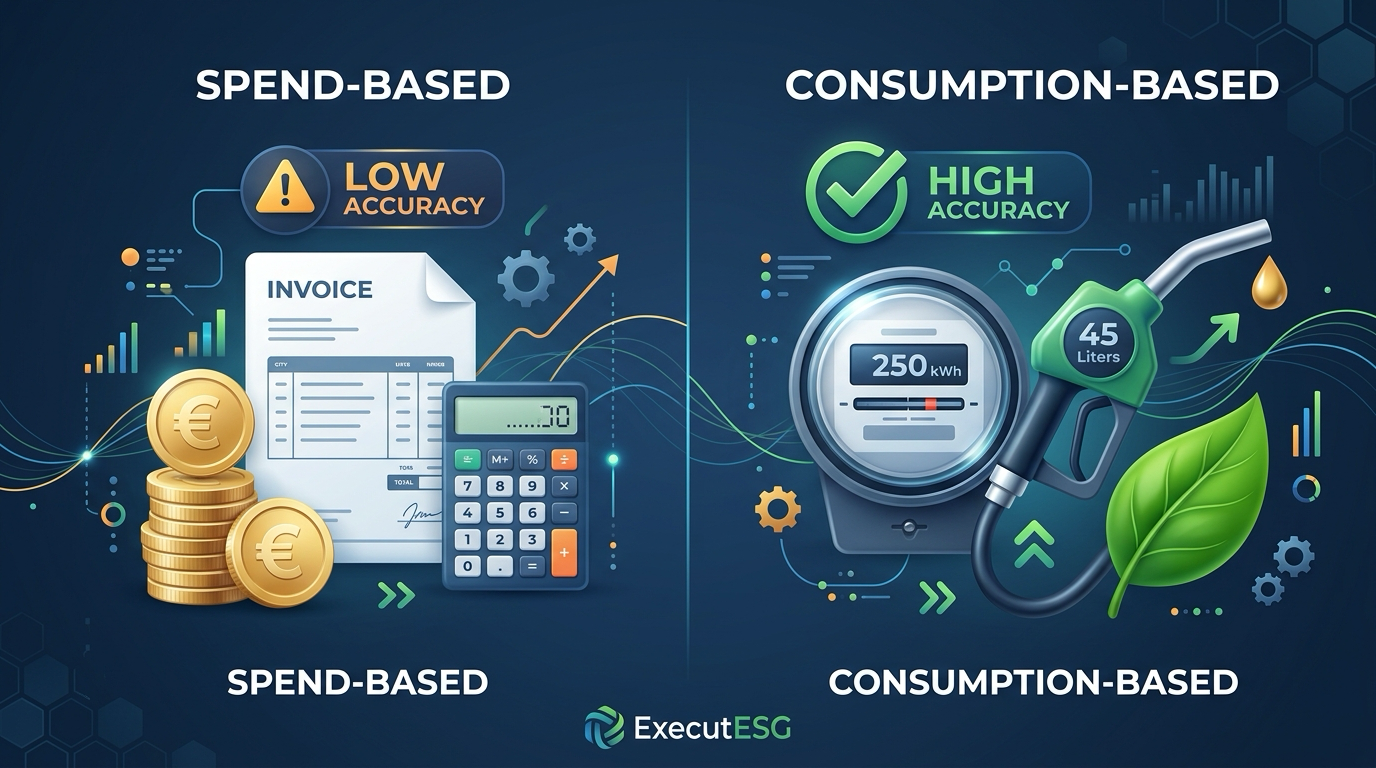
│ 3. Physical Units        │ Consumption measured in real physical units │
│                          │ (MWh, kWh, Liters), not crude spend factors.│
├──────────────────────────┼─────────────────────────────────────────────┤
│ 4. Consistency & Baseline│ Multi-year comparability showing historical │
│                          │ trends without unexplained restatements.    │
└──────────────────────────┴─────────────────────────────────────────────┘
When your sustainability data is generated directly from your general ledger (connecting transaction vouchers in Xero, QuickBooks, Visma Netvisor, Fortnox, or through a Universal CSV export), the bank’s credit analysts can verify your metrics using standard financial auditing methods.
4 Steps to Prepare Your Business for Green Financing
Finance teams planning debt renewals or applying for capital expenditure financing should take four proactive steps:
Step 1: Establish Your Historical VS (VSME) Baseline
Do not wait until the bank sends an ESG loan application questionnaire. Export the prior two fiscal years of general ledger transactions and compile an official EFRAG VS (VSME) baseline report. Having established multi-year data demonstrates managerial competence and transparency.
Step 2: Identify High-Impact Decarbonization CapEx
Identify capital investments that simultaneously reduce operating expenses and carbon intensity:
- Upgrading facility lighting to automated smart LEDs.
- Replacing oil or gas heating with industrial heat pumps.
- Installing on-site rooftop solar photovoltaics.
- Transitioning commercial vehicle fleets to electric or renewable diesel (HVO100).
Banks provide dedicated green loans with extended amortizations and subsidized rates for verified green CapEx investments.
Step 3: Package the Disclosure Binder for Your Relationship Manager
When submitting your annual financial statements, include the VS (VSME) Sustainability Disclosure Package alongside your balance sheet and cash flow projections. Ensure the binder includes:
- Basic Module energy and emissions disclosures (Disclosures B3 and B7).
- General ledger reconciliation logs demonstrating data integrity.
- Concrete, measurable targets for the upcoming 24 to 36 months.
Step 4: Negotiate a Sustainability-Linked Margin Grid
Ask your corporate lender for a Sustainability-Linked Loan margin grid. Tie 15 to 30 basis points of interest margin to two or three verifiable metrics:
- Target A: Reducing Scope 1 and Scope 2 emissions intensity per €1M of revenue by 5% annually.
- Target B: Transitioning facility electricity to 100% certified renewable contracts (Guarantees of Origin).
Frequently Asked Questions
Which banks in Europe offer green loan discounts to SMEs?
Most major commercial lenders in Northern and Western Europe offer green credit products, including Nordea, OP Financial Group, SEB, Swedbank, Danske Bank, Deutsche Bank, BNP Paribas, and ING. Products range from subsidized green equipment leasing to sustainability-linked working capital revolvers.
How does EFRAG VS (VSME) help during bank loan renewals?
EFRAG designed the voluntary VS (VSME) standard specifically to serve as the single, standardized sustainability format for European non-listed SMEs. Because European banks participate in EFRAG governance, providing a VS (VSME) report eliminates the need to complete dozens of redundant bank-specific ESG questionnaires.
Can a business lose its green margin discount if it misses targets?
Yes. Sustainability-Linked Loans feature bidirectional pricing. If a company achieves its agreed sustainability targets, it receives an interest discount. If it fails to meet the targets or fails to provide verified annual reporting, the margin discount resets to the standard commercial rate, and some contracts impose a minor margin penalty.
Turn Your Accounting Records into Lower Financing Costs
Corporate sustainability reporting is no longer just a compliance mandate; it is a financial asset that directly impacts your cost of capital. By compiling an audit-ready EFRAG VS (VSME) report directly from your accounting ledger, your finance team can satisfy bank lending covenants and secure competitive borrowing terms.
Create your free account on ExecutESG to connect your accounting system, compile your baseline report, and unlock green financing opportunities for your business today.
Check Your VS (VSME) & CSRD Readiness Score
Answer 6 quick questions under the EU Voluntary Standard VS (VSME) to discover your compliance gap score, estimated time savings, and generate your free starter report.
Stay Ahead of EU Sustainability Mandates
Get our weekly intelligence briefing on VS (VSME), CSRD compliance, buyer Scope 3 demands, and EcoVadis audits—distilled for European SMEs.