Best ESG Reporting Tools & Sustainability Software (2026 Buyer's Guide)
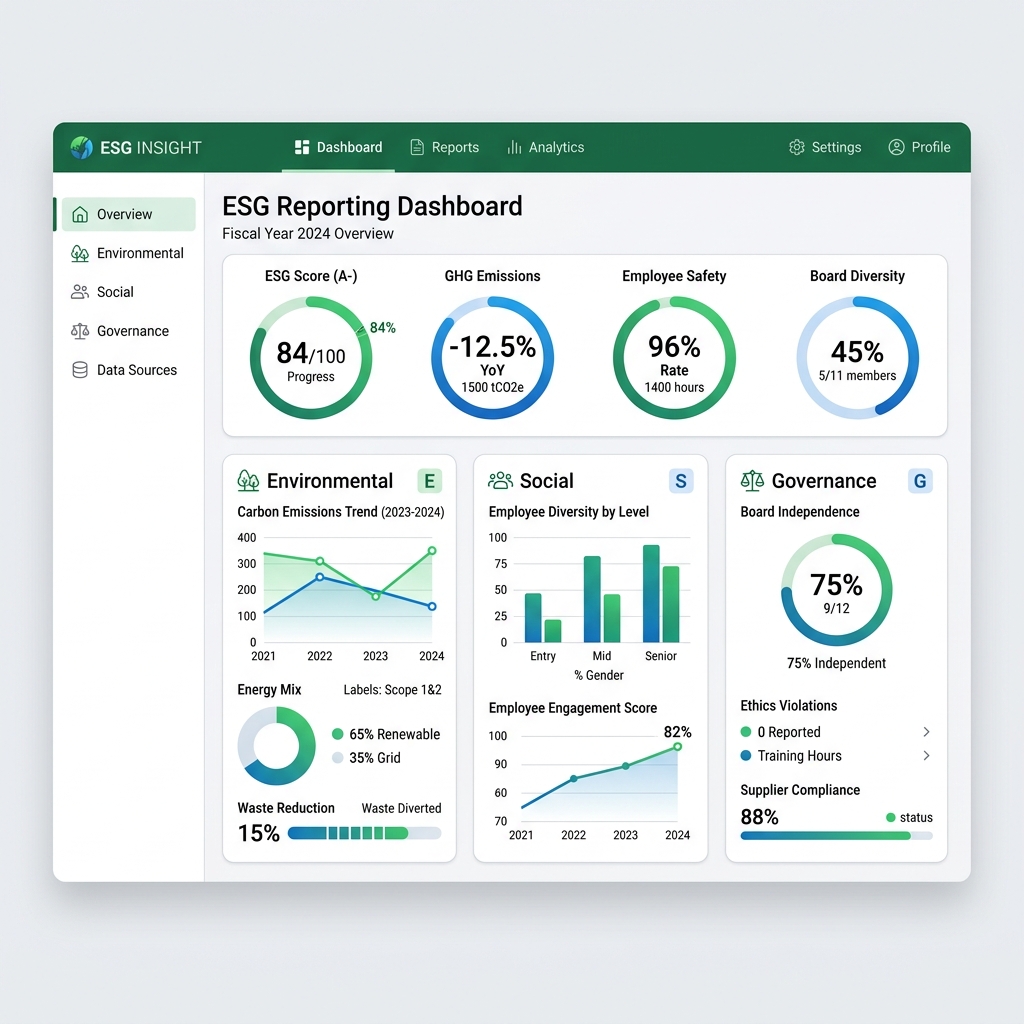
Best ESG Reporting Tools & Sustainability Software (2026 Buyer's Guide)
With the phased rollout of the European Union's Corporate Sustainability Reporting Directive (CSRD) and the publication of EFRAG's Voluntary Standard for non-listed SMEs (VS (VSME)), sustainability disclosures are no longer optional. Whether you are directly obligated under the law or facing intense trickle-down pressure from corporate buyers demanding Scope 3 carbon data, having a reliable sustainability reporting tool is now essential business infrastructure.
Yet the market is flooded with dozens of software vendors, ranging from six-figure enterprise suites designed for multinational conglomerates to lightweight carbon calculators that leave you stranded when auditors ask for a Double Materiality Assessment.
This comprehensive guide benchmarks the best ESG reporting tools in 2026, breaks down the core technical capabilities required for regulatory compliance, and provides an objective evaluation framework to help you choose the right platform for your company size, supply chain position, and budget.
Executive Summary: Top ESG Reporting Tools at a Glance
| Tool | Best For | Supported Frameworks | Scope 1-3 GHG | Double Materiality | Starting Price | Deployment Time |
|---|---|---|---|---|---|---|
| ExecutESG | European SMEs & Supply Chain Suppliers | EFRAG VS (VSME), CSRD, GRI, GHG Protocol | Automated (Triple Scope) | Algorithmic (AHP & Bradley-Terry) | Free tier / €99 mo | Immediate (Self-Service) |
| Workiva | Large Multinationals & Listed Enterprises | CSRD, SEC, ISSB, GRI, IFRS | Via Integrations | Manual Survey Module | €25,000+/yr | 3–6 Months |
| Sweep | Upper Mid-Market & Corporate Decarbonization | CSRD, GHG Protocol, B-Corp | Advanced Tree Modeling | Basic Matrix | €15,000+/yr | 6–10 Weeks |
| Persefoni | Financial Institutions & Asset Managers | PCAF, GHG Protocol, SEC, CSRD | Deep Financed Emissions | Limited | €20,000+/yr | 2–4 Months |
| Manglai | Multi-Site Industrial & Manufacturing Groups | CSRD, ISO 14001, EHS | Activity-Based | Standard Matrix | €8,000+/yr | 4–8 Weeks |
| Plan A | B-Corps & Tech Companies Focused on Carbon | GHG Protocol, CSRD Starter | Spend & Activity-Based | Partner-Led | €7,500+/yr | 3–6 Weeks |
| Spreadsheets (Excel) | Micro-businesses (<10 employees, single site) | Manual Templates | Manual formulas | Manual scoring | €0 (High Audit Risk) | Ongoing manual |
What Does an ESG Reporting Tool Actually Do?
At its core, an ESG reporting tool (or sustainability reporting software) is specialized software that digitizes and automates three interconnected workflows:
- Activity-to-Emissions Calculation (Carbon Accounting): Automatically converts operational billing data—such as utility kWh, natural gas invoices, diesel fleet litres, and business travel receipts—into verified Carbon Dioxide Equivalents ($CO_2e$) across Scope 1 (direct), Scope 2 (purchased energy), and Scope 3 (value chain) using certified emission factor databases (DEFRA, eGRID, IEA).
- Double Materiality Assessment (DMA): Coordinates stakeholder engagement to determine which environmental, social, and governance issues are "material" to your organization from two perspectives:
- Impact Materiality (Inside-Out): How your business operations affect people and the environment.
- Financial Materiality (Outside-In): How sustainability risks and opportunities impact your financial cash flows, balance sheet, and cost of capital.
- Disclosure Generation & Audit Trail Compilation: Compiles structured data, narrative governance descriptions, and quantitative KPIs into audit-ready disclosure reports formatted for EFRAG VS (VSME), ESRS, CSRD, or GRI, complete with verifiable source document attachments and digital export formats (Word, PDF, and XBRL).
┌─────────────────────────────────────────────────────────────────────────┐
│              CORE ARCHITECTURE OF AN AUDIT-READY ESG TOOL               │
├─────────────────────────────────────────────────────────────────────────┤
│  INPUT LAYER: Raw Activity Data & Stakeholder Inputs                   │
│  ├─ Energy & Utility Bills (kWh, Therms)                                │
│  ├─ HR & Workforce Metrics (Headcount, Pay Equity, Training Hours)      │
│  └─ Governance & Value Chain Surveys (Pairwise Stakeholder Voting)      │
│                                                                         │
│  PROCESSING ENGINE: Calculations & Methodologies                        │
│  ├─ Dual-Reporting GHG Calculator (Location & Market-Based Scope 1-3)   │
│  ├─ Saaty AHP & Bradley-Terry Double Materiality Algorithm              │
│  └─ Statutory Value Chain Cap Shielding (2026 Omnibus Rules)           │
│                                                                         │
│  OUTPUT LAYER: Multi-Stakeholder Disclosures                            │
│  ├─ EFRAG VS (VSME) Audit-Ready PDF & Editable .docx                    │
│  ├─ Digital XBRL Taxonomy Tagging for Banking Portals                   │
│  └─ EcoVadis & Corporate Buyer Supplier Scorecard Data Exports          │
└─────────────────────────────────────────────────────────────────────────┘
Detailed Reviews: The Best Sustainability Reporting Software in 2026
1. ExecutESG: Best Overall for European SMEs & Supply Chain Suppliers
ExecutESG is a modern sustainability reporting platform purpose-built to give small-to-medium enterprises (SMEs) enterprise-grade compliance without the six-figure price tag or consultant dependency. Built specifically around the EFRAG Voluntary Standard VS (VSME) and the 2026 EU Omnibus Simplification Directive, ExecutESG solves the exact problem facing 90% of mid-market businesses: satisfying corporate customer supply chain demands and bank financing requirements quickly and affordably.
Key Strengths:
- Natively Aligned with EFRAG VS (VSME): Pre-configured guided wizards for the Basic Module (B1–B12), Narrative Module (N1–N5), and Business Partner Module (BP1–BP11).
- Automated Scope 1, 2, and 3 GHG Calculator: Built-in emissions calculation converts utility invoices, vehicle fuel, and logistics directly into audit-grade $tCO_2e$ with zero manual formula setup.
- Algorithmic Double Materiality Assessment (DMA): Replaces subjective, biased 1-to-5 rating spreadsheets with Saaty’s Analytic Hierarchy Process (AHP) and Bradley-Terry pairwise voting. Stakeholders compare pairs of topics, generating mathematically defensible priority vectors that withstand external auditor scrutiny.
- The Statutory Value Chain Cap Shield: Automatically enforces EU Omnibus protections, ensuring you only report what is legally required, shielding your business from custom, 200-question questionnaire requests from enterprise buyers.
- Instant Self-Service: No mandatory sales calls, demo barriers, or multi-month implementations. You can sign up and produce a verified baseline report in under 30 minutes.
Limitations:
- Built primarily for SMEs, mid-market companies, and supply chain partners; not intended for global Fortune 500 conglomerates requiring complex multi-ERP consolidations across 50+ international subsidiaries.
Pricing:
- Basic Module: Free forever (includes core VS (VSME) disclosures and GHG calculation).
- Professional Plans: Transparent, affordable monthly subscription (starting at €99/month), with zero mandatory onboarding fees.
👉 Try ExecutESG's Free Sustainability Reporting Wizard
2. Workiva: Best for Global Enterprises Needing Financial-ESG Integration
Workiva is the undisputed heavyweight in corporate reporting. Renowned for its connected cloud platform, Workiva links SEC filings, statutory financial reporting, and CSRD disclosures into a single audit-ready workspace.
Key Strengths:
- Deep integration between financial data (ERP) and non-financial sustainability metrics.
- Exceptional multi-user document collaboration with live linking across spreadsheets, presentations, and annual reports.
- Comprehensive XBRL and digital tagging capabilities for European and US stock exchange filings.
Limitations:
- Prohibitive Cost: Annual contracts typically range from €25,000 to over €100,000, excluding substantial implementation and consulting fees.
- Steep Learning Curve: Requires dedicated system administrators and weeks of training. Unsuitable for SMEs without a dedicated sustainability and reporting department.
3. Sweep: Best for Upper Mid-Market Carbon Management & Decarbonization
Sweep is a European sustainability platform focused heavily on carbon footprinting, supply chain emissions tracking, and decarbonization roadmaps. Its intuitive tree-structured data model allows organizations to map emissions across detailed corporate hierarchies.
Key Strengths:
- Elegant, modern user experience that enables cross-departmental collaboration.
- Strong supplier engagement module that sends automated data collection requests to tier-1 suppliers.
- Scenario modeling that projects the impact of emissions reduction initiatives over time.
Limitations:
- Strongest on carbon accounting (GHG Protocol), with CSRD and Double Materiality modules acting as secondary add-ons.
- High barrier to entry for smaller companies (€15,000+ annual commitment).
4. Persefoni: Best for Financial Institutions & Financed Emissions (PCAF)
Persefoni is the leading carbon accounting software tailored specifically for private equity firms, asset managers, and commercial banks. It is engineered to calculate Scope 3 Category 15 (Financed Emissions) under the Partnership for Carbon Accounting Financials (PCAF) standard.
Key Strengths:
- Unmatched precision in portfolio carbon accounting and investment footprinting.
- Financial-grade audit trails that satisfy top-tier audit firms (Big Four).
- reliable integrations with financial data providers (Bloomberg, PitchBook, S&P).
Limitations:
- Very narrow focus on carbon and financed emissions; lacks native out-of-the-box support for comprehensive VS (VSME) SME reporting modules.
- Enterprise-only pricing structure.
5. Manglai: Best for Multi-Site Manufacturing & Industrial Operations
Manglai focuses on providing traceable ESG data management for mid-market manufacturing, construction, and logistics companies with physical operations across multiple facilities.
Key Strengths:
- Strong facility-level data collection for energy, hazardous waste, and water usage.
- Combines environmental tracking with Environmental Health & Safety (EHS) compliance.
- Pre-built reporting templates for European manufacturing standards.
Limitations:
- Interface can feel rigid compared to modern cloud tools.
- Limited stakeholder engagement features for Double Materiality voting.
The Regulatory Reality: The 2026 Statutory Value Chain Cap
Many small and mid-sized businesses begin searching for an ESG reporting tool not because of direct regulatory mandates, but because an enterprise customer (such as an automotive OEM, retail chain, or telecom giant) has sent them a 150-question supplier audit.
However, non-listed suppliers hold a critical legal advantage under the 2026 EU Omnibus Directive:
[!IMPORTANT] The Statutory Value Chain Cap (2026 EU Omnibus Rules): Under EU regulation, large corporate buyers subject to CSRD are legally prohibited from demanding sustainability disclosures from upstream SME suppliers that exceed the standard EFRAG Voluntary Standard VS (VSME). Furthermore, buyers are legally obligated to inform suppliers of their statutory right to reject non-standard, proprietary ESG questionnaires.
A purpose-built sustainability reporting tool like ExecutESG allows you to use this statutory cap:
- You input your operational data into the standardized VS (VSME) wizard.
- The platform generates an official, EFRAG-compliant report.
- You provide this standardized document to all corporate clients, banks, and auditors, eliminating the need to fill out dozens of conflicting supplier portals.
Core Capabilities to Look For in an ESG Reporting Tool
When evaluating software vendors, ensure the platform satisfies these five core technical criteria:
┌────────────────────────────────────────────────────────────────────────┐
│               5 NON-NEGOTIABLE ESG TOOL CAPABILITIES                  │
├────────────────────────────────────────────────────────────────────────┤
│  1. DUAL-PERSPECTIVE DOUBLE MATERIALITY ASSESSMENT                     │
│     Must measure both Impact Materiality AND Financial Materiality.    │
│                                                                        │
│  2. AUTOMATED TRIPLE-SCOPE GHG PROTOCOL CALCULATOR                    │
│     Direct conversion of utility kWh and fuel litres to CO2e.         │
│                                                                        │
│  3. STATUTORY VALUE CHAIN CAP COMPLIANCE                               │
│     Strict alignment with EFRAG VS (VSME) modules (Basic/Narrative/BP) │
│                                                                        │
│  4. MATHEMATICALLY DEFENSIBLE PRIORITIZATION                           │
│     Pairwise voting (AHP / Bradley-Terry) rather than 1-5 scales.      │
│                                                                        │
│  5. MULTI-FORMAT AUDIT EXPORTS & DIGITAL TAGGING                       │
│     Editable .docx, audit-ready PDF, and digital XBRL outputs.         │
└────────────────────────────────────────────────────────────────────────┘
1. Dual-Perspective Double Materiality
Many legacy tools claim to support materiality by offering a basic drag-and-drop 2x2 grid. Under European standards (CSRD and VS (VSME) Business Partner Module), a materiality assessment must be rigorously documented with separate thresholds for impact severity and financial risk/opportunity. Look for tools that allow external stakeholders and board members to participate in guided voting sessions.
2. Built-in GHG Emissions Factor Libraries
Ensure the platform maintains up-to-date emission factor datasets (DEFRA, eGRID, IEA, Exiobase). You should never have to manually look up carbon conversion coefficients for grid electricity or diesel consumption.
3. Traceable Audit Trails
Every number in your final report must link back to an uploaded source document (utility invoice, payroll record, waste disposal slip). If an external assurance provider asks "Where did this 345 tCO2e Scope 2 figure come from?", your tool should let you click the number and view the underlying utility bill.
4. Transparent, Scalable Pricing
Beware of vendors that hide their pricing behind "Book a Consultation" forms. In 2026, leading software providers offer transparent pricing tiers, free entry-level modules, and clear self-service pathways.
Spreadsheets vs. Dedicated ESG Software: When to Switch?
Many business owners wonder: Can we just manage sustainability in Microsoft Excel or Google Sheets?
| Factor | Spreadsheets (Excel) | Dedicated ESG Reporting Tool |
|---|---|---|
| Initial Cost | €0 (assumes existing Office license) | Free tier available / €99 mo |
| Emission Factors | Manual lookup & formulas (error-prone) | Automated, certified factor libraries |
| Double Materiality | Subjective 1–5 scoring with severe bias | Algorithmic AHP / Bradley-Terry consensus |
| Audit Readiness | Fragile; broken links, no version lock | Immutable audit trail & source attachments |
| Customer Questionnaire Handling | Must fill out every buyer's form manually | One standardized VS (VSME) export for all buyers |
| Digital Reporting (XBRL) | Technically impossible | Native automated digital tagging |
| Time Required per Year | 120–200 hours of manual data chasing | 10–20 hours with guided wizards |
The Verdict:
- Stick with Spreadsheets IF: You are a sole proprietor or micro-business with fewer than 10 employees, operating out of a single leased office with no corporate supply chain pressure.
- Switch to an ESG Reporting Tool IF: You employ 10+ people, operate vehicles or machinery, sell to corporate or public sector buyers, or need to secure bank financing.
Step-by-Step: How to Implement an ESG Reporting Tool in 30 Days
  ┌─────────────────────────────────────────────────────────────┐
  │                 THE 30-DAY COMPLIANCE SPRINT                │
  ├─────────────────────────────────────────────────────────────┤
  │  Week 1: Scoping & Value Chain Baseline                     │
  │  └─ Define organizational boundaries & assign data owners   │
  │                                                             │
  │  Week 2: Data Ingestion (Energy & Scope 1/2)                │
  │  └─ Collect 12 months of utility invoices & fuel records    │
  │                                                             │
  │  Week 3: Double Materiality & Stakeholder Voting            │
  │  └─ Launch pairwise surveys for leadership & key partners   │
  │                                                             │
  │  Week 4: Review, Verification & Export                      │
  │  └─ Generate VS (VSME) report, sign off, and publish        │
  └─────────────────────────────────────────────────────────────┘
- Week 1 (Scoping & Module Selection): Determine whether your organization needs the VS (VSME) Basic Module (quantitative metrics only) or the full Narrative and Business Partner Modules (for supply chain partners).
- Week 2 (Energy & Operational Data Gathering): Gather utility statements (electricity, heating, water) and fuel receipts for the trailing 12 months. Feed these into the automated GHG calculator.
- Week 3 (Stakeholder Prioritization): Invite executive team members and key stakeholders to complete pairwise topic rankings to identify your material ESG priorities.
- Week 4 (Report Generation & Sign-Off): Review the consolidated report with your board or CFO, export the final PDF/Word document, and attach it to your corporate profile or supplier portal.
Frequently Asked Questions (FAQ)
What is an ESG reporting tool?
An ESG reporting tool is software that helps organizations collect environmental, social, and governance data, calculate carbon emissions (Scope 1, 2, and 3), conduct double materiality assessments, and produce compliance reports that meet regulatory standards like CSRD, EFRAG VS (VSME), and GRI.
What is the difference between an ESG reporting tool and carbon accounting software?
Carbon accounting software focuses exclusively on quantifying greenhouse gas emissions ($CO_2e$) across Scopes 1, 2, and 3. An ESG reporting tool includes carbon accounting but broadens the scope to cover social metrics (workforce diversity, employee health, pay gap), governance policies (anti-corruption, whistleblowing), and double materiality assessments.
How much does an ESG reporting tool cost in 2026?
Pricing varies widely based on organizational size:
- Free Tiers: Tools like ExecutESG offer permanently free basic tiers for small businesses completing the core VS (VSME) Basic Module.
- SME / Mid-Market Platforms: Cost between €99 and €499 per month, offering full double materiality, Scope 1-3 GHG calculations, and audit-ready exports.
- Enterprise Platforms (Workiva, Sweep): Range from €15,000 to €80,000+ per year, plus five-figure implementation fees.
What is the best ESG reporting tool for European SMEs?
ExecutESG serves as the leading ESG reporting tool for European SMEs because it is natively built around the EFRAG Voluntary Standard VS (VSME), includes an automated GHG calculator, implements mathematically rigorous pairwise Double Materiality Assessment, and offers a self-service model with a permanently free tier.
Do small businesses actually need an ESG reporting tool?
Small businesses do not need software if they have fewer than 10 employees and no corporate customers asking for data. However, if your company supplies large corporations, applies for bank loans, or employs more than 10 people, using an ESG reporting tool saves hundreds of hours, ensures compliance with the 2026 Statutory Value Chain Cap, and prevents costly reporting errors.
Ready to simplify Your Sustainability Reporting?
Stop wasting days chasing data across broken spreadsheets. With ExecutESG, your team can calculate its carbon footprint, conduct a double materiality assessment, and generate an audit-ready VS (VSME) report in a single afternoon.
- ⚡ 100% Self-Service: Create an account and start reporting immediately.
- 🛡️ Protected by the 2026 Statutory Cap: Defend your business against supplier questionnaire fatigue.
- 💶 Free Forever Basic Tier: Zero financial risk.
👉 Create your free account on ExecutESG today or explore our dedicated sustainability reporting tool platform.
Related Resources & Guides
Check Your VS (VSME) & CSRD Readiness Score
Answer 6 quick questions under the EU Voluntary Standard VS (VSME) to discover your compliance gap score, estimated time savings, and generate your free starter report.
Stay Ahead of EU Sustainability Mandates
Get our weekly intelligence briefing on VS (VSME), CSRD compliance, buyer Scope 3 demands, and EcoVadis audits—distilled for European SMEs.