VS (VSME) for Warehousing & Logistics: ESG and Carbon Accounting Guide
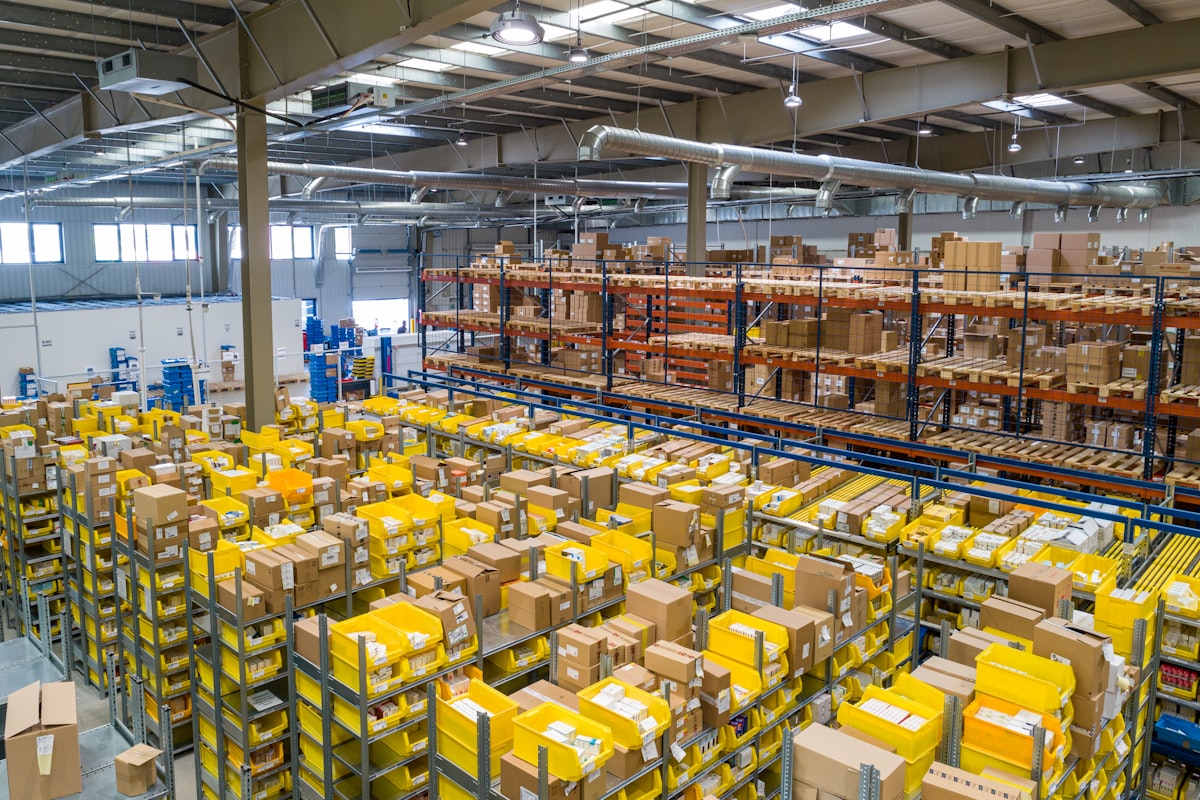
VS (VSME) for Warehousing & Logistics: The Complete ESG & Carbon Accounting Playbook
European companies operating in Commercial Warehousing, Cold Storage & Fulfillment (NACE H52.1, H52.10) face a fundamental shift in commercial operations. While small and medium-sized enterprises (SMEs) are not directly mandated under the first wave of the Corporate Sustainability Reporting Directive (CSRD), their enterprise customers, commercial banks, and public procurement boards are.
As Tier-1 corporate buyers calculate their upstream Scope 3 value-chain footprints, they are transferring their reporting burden onto their supply chain. For warehousing & logistics operators, answering dozens of bespoke, unstandardized sustainability questionnaires has become a major administrative drain.
To eliminate questionnaire fatigue, European authorities and EFRAG (European Financial Reporting Advisory Group) developed the VS (VSME) standard (Voluntary Standard for Non-Listed SMEs). Adopting the VS (VSME) framework provides warehousing & logistics businesses with a single, legally recognized, audit-ready sustainability credential that satisfies customer audits, bank loan covenants, and green tender requirements.
The Industrial Reality: Why Warehousing & Logistics Needs a Standardized ESG Strategy
Third-party logistics (3PL) providers, cold storage operators, and regional fulfillment centers manage millions of square meters of European commercial property. Their carbon footprint is dominated by facility energy consumption—particularly industrial refrigeration, thermal space conditioning, and electric material handling equipment.
In this sector, sustainability is not a branding exercise—it directly dictates customer retention, insurance underwriting terms, and commercial credit availability. European warehousing & logistics firms face three concurrent operational pressures:
- Enterprise Scope 3 Data Inquiries: Enterprise retail and pharma clients demand rooftop solar PV coverage ratios, certified green electricity contracts, zero-landfill packaging policies, and verified temperature data integrity.
- Rising Operational Energy Costs & Carbon Penalties: Managing volatile energy tariffs requires strict monitoring of fuel combustion and machine power draws.
- Green Tender & Procurement Scoring: Municipal logistics concessions and corporate 3PL RFPs mandate BREEAM/LEED certified warehouse operations and audited VS (VSME) Scope 1 & 2 carbon disclosures.
Instead of hiring external management consultants at €15,000 to €40,000, adopting the standardized VS (VSME) framework allows companies to establish an audit-compliant reporting baseline in days.
Navigating the Three VS (VSME) Reporting Modules for Warehousing & Logistics
The official VS (VSME) framework operates on a modular, proportionate architecture tailored to business complexity:
1. Basic Module (Core Environmental & Social Baseline)
Every warehousing & logistics business adopting VS (VSME) completes this foundational tier. It captures baseline energy consumption (in MWh), direct Scope 1 greenhouse gas emissions, Scope 2 purchased electricity emissions, non-hazardous and hazardous waste tonnage, and workplace health and safety incident rates.
2. Narrative-PAT Module (Policies, Actions, and Targets)
Focuses on formal governance: Does your enterprise maintain documented policies for environmental risk mitigation? What capital expenditure (CapEx) investments are planned over the next 24 to 36 months to reduce energy consumption or transition vehicle fleets?
3. Business Partners (BP) Module (Commercial & Value-Chain Disclosures)
Specifically designed for suppliers responding to enterprise customer questionnaires. It codifies the exact metrics required by multinational procurement departments and corporate sustainability platforms like EcoVadis and CDP.
Step 1: Measuring Scope 1 Direct Emissions
Under the VS (VSME) standard, Scope 1 covers all direct greenhouse gas emissions resulting from operations owned or directly controlled by your company.
Primary Scope 1 Operational Hotspots in Warehousing & Logistics:
- Thermal Combustion: On-site diesel emergency backup generators, natural gas space heaters in dock loading bays, propane/diesel yard tractors, and fugitive refrigerant losses from chilled warehouse cooling circuits.
- Mobile Fleet Operations: Fuel consumed across on-site machinery, logistics transport, and field service vans.
- Fugitive Losses: Industrial gas leaks, solvent evaporation, or refrigerant escapes from cooling loops.
Industry Benchmark & Intensity Factor:
- Sector Benchmark: 12 to 35 kg CO2e per square meter of ambient warehouse space; up to 95 kg CO2e per square meter of refrigerated/frozen storage
Calculation Blueprint:
To compute your Scope 1 footprint under VS (VSME):
For example, consuming 15,000 liters of commercial diesel in service vehicles and plant machinery results in:
Enterprises can automate this calculation by importing fuel card statements or Netvisor/DATEV accounting receipts directly into the ExecutESG VS (VSME) Carbon Registry.
Step 2: Accounting for Scope 2 Electricity & Facility Energy
Scope 2 emissions represent indirect greenhouse gas emissions associated with purchased electricity, district heating, or industrial steam consumed on your premises.
Primary Scope 2 Electrical Draws in Warehousing & Logistics:
- Machine Power Consumption: Continuous electrical refrigeration systems for multi-temperature cold stores, high-bay automated storage and retrieval systems (ASRS), forklift battery charging rooms, and 24/7 sorting conveyor lines.
- Sector Energy Benchmark: 45 to 160 kWh per square meter annually for ambient; 150 to 420 kWh per square meter for deep freeze (-25°C)
Dual Reporting: Location-Based vs. Market-Based
Under the EFRAG VS (VSME) standard and GHG Protocol Scope 2 Guidance, companies must report using both methods:
| Metric | Location-Based Calculation | Market-Based Calculation |
|---|---|---|
| Data Source | National/regional average grid carbon intensity (e.g. Fingrid in Finland, Vattenfall in Sweden, UBA in Germany). | Specific supplier contractual rates, Guarantees of Origin (GoOs), or Power Purchase Agreements (PPAs). |
| Commercial Utility | Establishes geographical infrastructure dependency. | Quantifies immediate decarbonization achievements from green energy contracts. |
| VS (VSME) Disclosure | Reported under Basic Module metric B1. | Reported under Basic Module metric B1 (where contracts exist). |
Step 3: Managing Scope 3 Supply Chain Pressure & Materiality
While full upstream and downstream Scope 3 accounting can be administratively overwhelming for an SME, the VS (VSME) Business Partners module focuses on high-impact, actionable supply-chain metrics that enterprise customers demand.
Critical Scope 3 Hotspots for Warehousing & Logistics:
- Upstream Raw Materials: Packaging waste generated during order fulfillment (wooden Euro pallets, stretch film, bubble wrap, corrugated cardboard boxes); inbound and outbound freight emissions; facility construction embodied carbon.
- Transport Logistics: Inbound freight of raw materials and outbound shipping of finished products.
- Waste & By-Product Circularity: Documented recovery, scrap recycling, and certified diversion from landfill.
Double Materiality Assessment (DMA) Priorities:
Under the VS (VSME) Narrative Module, warehousing & logistics leadership must assess both Impact Materiality (how business operations impact people and the environment) and Financial Materiality (how environmental risks affect corporate cash flow and balance sheet valuation).
To conduct a compliant, audit-ready materiality review in days rather than months, explore our Double Materiality Assessment (DMA) Pairwise Protocol.
Workforce, Health & Safety Metrics (Social Pillar)
Social performance under VS (VSME) is grounded in verifiable employee welfare and occupational safety metrics:
- Lost Time Injury Frequency Rate (LTIFR): Monitored per 1,000,000 working hours:
LTIFR = (Total Lost Time Injuries × 1,000,000) ÷ Total Man-Hours Worked* **Operational Hazards:** Forklift and pedestrian traffic segregation, musculoskeletal strain prevention in manual order picking, cold-room exposure time limits, and thermal PPE compliance. * **Remuneration & Fair Pay:** Gender pay gap ratio across operational tiers and median entry-level wage compared to local statutory minimums.
Corporate Governance & Supply Chain Integrity
Enterprise buyers require assurance that their partners maintain ethical corporate governance:
- Regulatory Compliance: Customs bonded warehouse licenses, GDP (Good Distribution Practice) compliance for pharmaceuticals, fire safety certifications, and cargo loss prevention controls.
- Anti-Bribery & Whistleblower Mechanisms: Documented confidential reporting channels compliant with the EU Whistleblower Protection Directive.
- Payment Practices: Reporting average payment terms (in days) to SME vendors, supporting supply chain liquidity.
EcoVadis & Customer Questionnaire Crosswalk
One of the largest hidden costs for European warehousing & logistics businesses is the repetitive completion of customer ESG questionnaires. The VS (VSME) report solves this problem through high structural overlap:
EcoVadis Pillar VS (VSME) Standard Section Shared Data Points & Documentation Environment (ENV) Basic Module (B1–B4) Scope 1 & 2 GHG emissions, energy consumption (MWh), waste generation, water withdrawal, recycling certifications. Labor & Human Rights (LAB) Basic Module (B5–B8) LTIFR accident rates, health & safety training records, collective bargaining coverage, fair wage documentation. Ethics (ETH) Governance & Narrative Module Anti-corruption policy declarations, whistleblowing procedures, GDPR/data security protocols. Sustainable Procurement (SUP) Business Partners Module (BP1–BP5) Supplier codes of conduct, conflict mineral tracing, raw material environmental certifications. Crosswalk Result: Completing an audited VS (VSME) report covers 75% alignment with EcoVadis Logistics & Storage assessment criteria, transforming a weeks-long questionnaire ordeal into a simple document hand-off. For a complete mapping methodology, see our EcoVadis to VS (VSME) Scorecard Guide.
The Commercial Advantage: Winning Green Tenders & Lowering Financing Costs
Adopting VS (VSME) is a commercial revenue driver, not an administrative overhead:
- Winning High-Value Public & Private Contracts: Under the EU Net-Zero Industry Act and national procurement frameworks, public bids allocate 15% to 30% of competitive evaluation scoring to verified sustainability performance. Warehousing & Logistics firms with verified VS (VSME) credentials routinely beat competitors relying on unverified claims.
- Commercial Bank Loan Margins: European commercial banks increasingly link loan interest spreads to digital ESG disclosures. Machine-readable VS (VSME) reports enable lenders to categorize loans under Green Asset Ratio (GAR) portfolios, unlocking favorable financing terms.
- Customer Retention: Preemptively delivering an audited VS (VSME) annual report cements your position on enterprise preferred-supplier panels before competitors can react.
Step-by-Step Implementation Roadmap: From Zero to Audit-Ready
European warehousing & logistics enterprises can complete an audit-grade VS (VSME) report in 15 to 20 operational hours:
1 Step 1: Hours 1–4Collect utility invoices, fuel card records & workforce safety logs.2 Step 2: Hours 5–10Ingest records into the ExecutESG automated calculation engine.3 Step 3: Hours 11–15Complete Narrative policies & Business Partners modules.✓ Step 4: CompletionExport verified digital report & machine-readable XBRL package.- Gather Operational Records: Aggregate annual utility invoices (electricity in kWh, natural gas/fuel oil), fuel card statements, waste disposal manifests, and HR safety logs.
- Calculate Carbon Metrics: Input energy data into the automated ExecutESG VS (VSME) Calculator to instantly apply verified emission factors.
- Complete the Disclosure Template: Document core operational policies, workplace safety metrics, and supplier expectations.
- Publish & Share: Distribute your verified digital report and machine-readable XBRL package directly to enterprise customers, banks, and tender portals.
Useful Resources & Tools
- Free VS (VSME) Digital Template & Reporting Tool — Download the standardized EFRAG-compliant reporting template.
- Scope 1, Scope 2 & Scope 3 Emissions Guide — Practical carbon accounting methods for mid-market suppliers.
- Double Materiality Assessment (DMA) Guide — How to conduct an audit-compliant materiality review.
- Open-Source VS (VSME) Sustainability Framework — Explore our open calculation algorithms, JSON schemas, and developer toolkits.
Check Your VS (VSME) & CSRD Readiness Score
Answer 6 quick questions under the EU Voluntary Standard VS (VSME) to discover your compliance gap score, estimated time savings, and generate your free starter report.