VS (VSME) for Warehousing & Logistics in Poland: ESG Compliance & Carbon Guide
VS (VSME) for Warehousing & Logistics in Poland: The Operational ESG & Carbon Guide
Companies operating in Commercial Warehousing, Cold Storage & Fulfillment (NACE H52.1, H52.10) across Poland are entering a new era of regulatory scrutiny and supply chain accountability. While mid-market suppliers are exempt from direct statutory fines under initial CSRD thresholds, their corporate clients, commercial banking partners, and public contracting bodies in Poland are legally bound to audit their supply chains.
Whether responding to corporate customer audits or preparing competitive bids for municipal and national contracts, warehousing & logistics enterprises in Poland can no longer rely on unverified sustainability claims.
Adopting the official VS (VSME) standard (Voluntary Standard for Non-Listed SMEs), developed by EFRAG, provides warehousing & logistics operators with a standardized, audit-grade reporting framework that satisfies European CSRD Scope 3 requirements, local legislation, and international supplier scorecards like EcoVadis.
The Regulatory Environment in Poland
Warehousing & Logistics businesses in Poland operate under specific national statutes and commercial expectations that govern energy, carbon emissions, and workforce standards:
- National Climate Policy: National Energy and Climate Plan (KPEiK) aligned with EU Green Deal 2050 targets.
- Supply Chain Mandates: Polish Accounting Act (Ustawa o rachunkowości) CSRD implementation and German LkSG supplier cascade audits.
- Public Procurement Standards: Polish Public Procurement Law (Prawo zamówień publicznych) incorporating green award criteria.
Under these frameworks, enterprises that fail to provide transparent, verifiable ESG data risk exclusion from Tier-1 corporate supply chains, disqualification from public tenders, and higher borrowing spreads from commercial lenders.
- Climate Target: National Energy and Climate Plan (KPEiK) aligned with EU Green Deal 2050 targets...
- Supply Chain: Polish Accounting Act (Ustawa o rachunkowości) CSRD implementation and German Lk...
- Procurement: Polish Public Procurement Law (Prawo zamówień publicznych) incorporating green a...
A single, audit-ready European reporting framework that simultaneously satisfies CSRD Scope 3 requirements, local legislation, and enterprise auditor scorecards.
Preferred-supplier status with Tier-1 buyers, 15–30% scoring weight advantages on tenders, and preferential bank financing rates.
Sector Profile: Warehousing & Logistics Operations in Poland
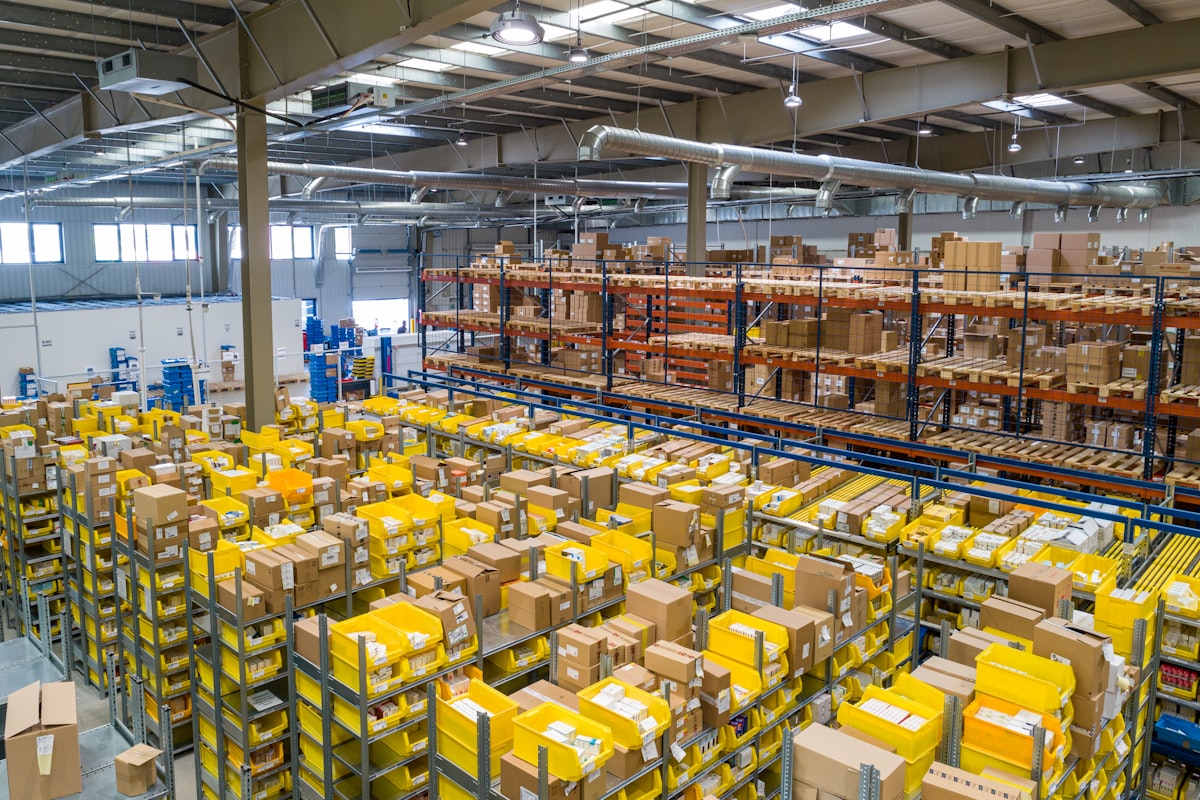
Third-party logistics (3PL) providers, cold storage operators, and regional fulfillment centers manage millions of square meters of European commercial property. Their carbon footprint is dominated by facility energy consumption—particularly industrial refrigeration, thermal space conditioning, and electric material handling equipment.
In Poland, warehousing & logistics enterprises face direct operational challenges that make standardized reporting essential:
- Customer Demands: Enterprise retail and pharma clients demand rooftop solar PV coverage ratios, certified green electricity contracts, zero-landfill packaging policies, and verified temperature data integrity.
- Tender Implications: Municipal logistics concessions and corporate 3PL RFPs mandate BREEAM/LEED certified warehouse operations and audited VS (VSME) Scope 1 & 2 carbon disclosures.
- Accounting Integration: Rapid data extraction from local ERP and accounting platforms (Comarch ERP Optima, InsERT Subiekt GT, Asseco WAPRO) allows seamless calculation of energy and emissions metrics without expensive external consulting engagements.
Step 1: Measuring Scope 1 Direct Emissions in Poland
Scope 1 emissions encompass all direct greenhouse gas releases from combustion sources owned or leased by your enterprise in Poland.
Primary Scope 1 Sources for Warehousing & Logistics:
- Stationary Combustion: On-site diesel emergency backup generators, natural gas space heaters in dock loading bays, propane/diesel yard tractors, and fugitive refrigerant losses from chilled warehouse cooling circuits.
- Mobile Operations: Diesel and petrol consumed across commercial transport vehicles, site machinery, and company maintenance vans.
- Fugitive Losses: Refrigerant gas leakage from HVAC cooling circuits, industrial chillers, or process gases.
Sector Benchmark:
- Average Emission Intensity: 12 to 35 kg CO2e per square meter of ambient warehouse space; up to 95 kg CO2e per square meter of refrigerated/frozen storage
Calculation Formula:
For example, if your facility in Poland consumes 18,000 liters of commercial diesel across transport and on-site plant equipment:
Data can be aggregated automatically by importing fuel invoices from your Comarch ERP Optima ledger directly into the ExecutESG VS (VSME) Reporting Platform.
Step 2: Accounting for Scope 2 Electricity in Poland
Scope 2 emissions represent indirect greenhouse gas releases associated with purchased electricity, district heating, or process steam consumed at your operating facilities.
Electrical Energy Intensity in Warehousing & Logistics:
- Facility Machine Draws: Continuous electrical refrigeration systems for multi-temperature cold stores, high-bay automated storage and retrieval systems (ASRS), forklift battery charging rooms, and 24/7 sorting conveyor lines.
- Sector Power Intensity: 45 to 160 kWh per square meter annually for ambient; 150 to 420 kWh per square meter for deep freeze (-25°C)
Poland Grid Carbon Intensity:
- National Grid Mix Factor: 0.660 kg CO2e/kWh (Polish grid factor)
Worked Calculation for Poland:
Under the VS (VSME) Basic Module, companies must report their location-based electricity footprint using the national average grid factor:
If an active warehousing & logistics shop in Poland consumes 120,000 kWh of grid power annually:
Market-Based Reporting & Guarantees of Origin (GoOs)
If your company purchases certified renewable electricity supported by Guarantees of Origin (GoOs) or Corporate Power Purchase Agreements (PPAs) in Poland, your market-based Scope 2 emissions are reported as 0.00 tCO2e. Under the EFRAG VS (VSME) standard, both location-based and market-based figures must be disclosed side-by-side in Basic Module metric B1.
Step 3: Scope 3 Value-Chain Alignment & Material Hotspots
Under the VS (VSME) Business Partners Module, warehousing & logistics companies disclose critical supply chain metrics that enterprise buyers in Poland and across Europe require for their own CSRD reports.
Priority Supply Chain Pressure Points for Warehousing & Logistics:
- Upstream Materials: Packaging waste generated during order fulfillment (wooden Euro pallets, stretch film, bubble wrap, corrugated cardboard boxes); inbound and outbound freight emissions; facility construction embodied carbon.
- Outbound Logistics: Freight transportation emissions across European delivery lanes.
- Waste Circularity: Quantified scrap recovery rates, certified recycling manifests, and hazardous waste treatment documentation.
To evaluate which sustainability issues create the greatest commercial and financial exposure for your company, conduct an EFRAG-aligned assessment with our Double Materiality Assessment (DMA) Guide.
Social & Workforce Metrics (Social Pillar in Poland)
Social responsibility under VS (VSME) requires empirical workforce metrics that align with national labor standards:
- Lost Time Injury Frequency Rate (LTIFR): Standardized safety metric:
Corporate Governance & Due Diligence
Corporate buyers in Poland subject to supply chain due diligence laws require verified governance safeguards from their SME suppliers:
- Statutory Compliance: Customs bonded warehouse licenses, GDP (Good Distribution Practice) compliance for pharmaceuticals, fire safety certifications, and cargo loss prevention controls.
- Whistleblower Channels: Confidential reporting systems compliant with national transposition of the EU Whistleblower Directive.
- Anti-Corruption & Fair Competition: Documented policies preventing bribery in public contract tenders and commercial subcontracting.
Local ERP & Accounting Integration in Poland
The primary operational bottleneck in sustainability reporting is manual data transcription. European businesses running Comarch ERP Optima, InsERT Subiekt GT, Asseco WAPRO can simplify data collection:
| System | Primary Data Ingestion Point | VS (VSME) Output |
|---|---|---|
| Comarch ERP Optima | Fuel ledger accounts, utility bills (kWh/MWh), and waste manifests. | Automated Scope 1 & Scope 2 carbon metrics. |
| National Fuel Cards | Fleet diesel, petrol, and HVO transaction reports. | Direct transport Scope 1 calculation. |
| Payroll / HR Modules | Monthly headcount, hours worked, and incident reports. | Basic Module social and LTIFR metrics. |
Using the ExecutESG VS (VSME) Digital Platform, your finance team can map ledger entries directly into EFRAG-compliant metrics in hours.
EcoVadis & Customer Questionnaire Mapping
For warehousing & logistics suppliers in Poland, customer questionnaire fatigue is a major cost center. The VS (VSME) framework provides high coverage against third-party platforms:
- Questionnaire Coverage: 75% alignment with EcoVadis Logistics & Storage assessment criteria
- Single Audit Artifact: Instead of answering customized questionnaires from every buyer, suppliers provide their certified annual VS (VSME) report.
- Deep Mapping: Learn how to translate metrics in our EcoVadis to VS (VSME) Scorecard Guide.
Winning Green Tenders & Commercial Financing in Poland
Adopting VS (VSME) delivers immediate commercial returns in the domestic market:
- Winning Public Bids: Procurement authorities in Poland operating under Polish Public Procurement Law (Prawo zamówień publicznych) i award decisive evaluation bonus points to bidders with verified carbon accounting.
- Lowering Bank Financing Costs: Local commercial banks reward digital ESG disclosures with reduced interest rate margins under European Green Asset Ratio (GAR) financing facilities.
- Preferred Vendor Status: Multinational enterprise customers operating in Poland actively consolidate their supplier bases around ESG-transparent partners.
Implementation Roadmap: 15 Hours to an Audit-Grade Report
Your team can produce a fully compliant, audit-ready VS (VSME) report in four structured phases:
- Phase 1 (Hours 1–4): Extract annual utility statements (kWh electricity, gas/fuel), fleet fuel receipts from Comarch ERP Optima, and HR safety logs.
- Phase 2 (Hours 5–10): Input energy data into the automated ExecutESG VS (VSME) Reporting Tool to apply Poland's national grid factor (0.660 kg CO2e/kWh (Polish grid factor)).
- Phase 3 (Hours 11–14): Complete the Narrative-PAT and Business Partners modules documenting company policies and supply chain safeguards.
- Phase 4 (Hour 15): Export your verified PDF report and digital XBRL compliance package to share with enterprise clients, banks, and procurement portals.
Essential Guides & Tooling
- VS (VSME) for Warehousing & Logistics: Complete Master Guide — Deep industrial sector benchmark and operational analysis.
- Free VS (VSME) Digital Reporting Platform — Standardized EFRAG-compliant reporting software for European SMEs.
- Scope 1, 2 & 3 Emissions Guide — Practical carbon accounting methods for mid-market suppliers.
- Double Materiality Assessment (DMA) Protocol — Step-by-step guidance on conducting an audit-ready materiality review.
- Open-Source VS (VSME) Framework — Open calculation algorithms, JSON schemas, and technical tools.
Check Your VS (VSME) & CSRD Readiness Score
Answer 6 quick questions under the EU Voluntary Standard VS (VSME) to discover your compliance gap score, estimated time savings, and generate your free starter report.